Wednesday, August 18, 2010

Still Building


In my last post I set out a path for completing the planning phase of my new current WIP within two weeks, so that I can begin to write the first draft. I set a goal of writing basic scene descriptions for the entire plot, and then writing detailed scene descriptions for each scene (totaling 30+ pages). I completed the first part, mapping out every scene using the Marshall Plan template, and ended up revising the plot two times in the process. Seeing the opportunity to make even more improvements, I decided to hold off on the detailed scene descriptions until I finish yet another revision of later scenes.

It's a fascinating world, and I truly love these characters. I feel there is more story potential here and I need to slow down and spend more time developing it. I've already spent a few hundred hours planning this story over the past 3 years but there is just so much more I can see doing with the characters and events. The challenge is to accomplish these things in a limited amount of pages and point-of-view characters. It's an epic fantasy novel, and keeping it tightly woven is a challenge. I'm having a lot of fun with it, and a lot of success.

A key effort has been to weed out the "new stuff" that I kept throwing into the plot. It's much better to re-use the same "old stuff" that's already there. This makes a considerable difference in Act II, which is the middle half of the book. A lot happens here. I need to focus on a few events and their lasting impact, and allow the characters time to deal with these things in meaningful ways. For instance, instead of introducing yet another new character, I've found ways to re-introduce existing characters. I even brought one character back from the dead! What a surprise to me, and no doubt to the main character. It is fantasy, so this sort of thing is quite doable; the strength it adds to the story is readily apparent. Giving the characters time to deal with things does not mean adding a lot of reaction scenes -- it just means that the new action scenes follow and build on existing situations rather than representing a constant departure for new, unrelated adventures. Things unfold, one to the next, in a direct and relevant fashion, rather than as a hodge-podge of new things thrown at the characters.

I'm now making my third revision of Act II, each time tightening, narrowing, further developing what's already there. It's greatly improving the story. I've spent a lot of time on it these past two weeks and am spending a lot of time again this week. I won't worry about the self-imposed deadline of two weeks, which has just passed. As long as I'm working hard and making such solid progress, watching the story improve visibly in front of my eyes, I have no reason to rush ahead. I'll give myself the time I need to complete this important work before solidifying it with the detailed scene descriptions, the final task before I'll be ready to begin the first draft. This added effort now will help make that draft much easier to write, and should considerably reduce the macro-level editing to follow.

Wish I could share details, but I guess the best way to do that is to wait until the final draft is complete, when I can share the whole story!

Working hard and loving it,

Adrian

Saturday, August 07, 2010

Progress with Planning


Just a quick update on the planning work for my new WIP. This past week I reviewed prior Snowflake planning notes and tweaked the characters' perspectives based on how they've developed in my thoughts over time. I also tightened the parameters (number of POV characters, word count), completed a preliminary scene list for the entire novel using the Marshall Plan, and have done "Stage 1" basic scene descriptions for the first half plus the ending. I have about 20 scenes in the later second act left to map out, then I'll have to step back and take a look at the whole thing before continuing to the next stage.

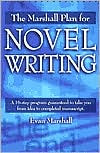
This marks the first time that I've actually followed the Marshall Plan as-is throughout the entire novel. I usually do my own thing based on the Marshall Plan, but with more POV characters and with a less-than-true order to the scenes. This time I wanted to stay within the limits of the Plan and see how it turns out. I like it!

It's amazing how tightly the story is now plotted. I saw opportunities to consolidate scenes, handling more than one item of business in the same scene. I also was much more aware of the impact of POV, and that's certainly a good thing. Plotting this tightly is hugely beneficial. I can always add a scene or two here or there later on if I feel it is needed. I know the story well and know I can't represent everything in the novel. Some of it is too peripheral, even if it is interesting in its own right. I'm keeping it focused and the extraneous clearly stands out.

I'll complete the basic scene descriptions in the next day or two, then during the coming week I'll go back over them and write the "Stage 2" descriptions, 30+ pages featuring a paragraph or two for each scene summarizing the gist and including any tidbits of dialog that I know already, certain key lines that must be said at certain key points. Hopefully by the end of this coming week the slightly-more-detailed scene descriptions will be complete, and then I'll take time to rehash, review and polish the plan yet again.

Feels good to see such concrete progress!

Adrian

Saturday, July 31, 2010

Charting the Course


My recent Creative Break is officially over! I'm back at work and have been for a couple of weeks, albeit off and on. Now I'm rolling up my shirt sleeves, baring my knuckles, preparing to dive in and stir up the dust to drive things home! And no, I don't have time to cut down on mixed metaphors!

I'm excited, which is a good sign. I needed a break and I don't regret taking it. My head is clear and my sense of purpose is sharp. The iron is hot. Time to strike.

As always, I reflected on how things went this last go-round, in order to avoid whatever pitfalls I encountered and make a better go of it this time. Here's what I decided:

(1) I can burn out on a story if I spend too many months and too much effort on it. It's more important to get through a draft. I'll limit myself to a quick first draft, whatever the result, and trust in my editing capabilities, which I'm quite happy with after seeing how I turned rough stuff into slick stuff over the past several months.

(2) I'm going to work from a detailed scene list rather than just major plot pillars. The details can be basic (POV character, goal, complication, result, time, place, etc.). To help me plan, I'm using the Snowflake Method for brainstorming and general overview, the Marshall Plan for scene and sequence, and to write it I'll use yWriter5 for the first time.

(3) Some other things I won't blog about, including new tricks I've come up with that are helping immensely. You know I've gotten onto some really good stuff if I'm not sharing it.

Once again, I won't say anything about the novel since I want it to sell. I won't even give it a name. It's just my current WIP. Nuff said.

Good to be back in the driver's seat, on the road again, building steam in the engine, etc.

Current goals: finish planning in one to two weeks; start first draft immediately once scene list is complete; finish first draft within three months of starting it. Oh, and do a really good job with it! ;-)

Wishing Wynn a lot of fun in Greece, where she may finally wrap up her novel on Alexander the Great this summer, and wishing everyone else all the enthusiasm they can muster,

Adrian

Sunday, July 18, 2010

Who'da Thunk It?


According to a web site which analyzes your writing and compares it to other authors, I write like:


I write like
Dan Brown

I Write Like by Mémoires, Mac journal software. Analyze your writing!


Who'da thunk it?! (hahahaha)

I tried it with a sample of my recent WIP, the one I worked on steadily from November until recently. Trying it again with another section of text from the same WIP, I got these results:


I write like
Ian Fleming

I Write Like by Mémoires, Mac journal software. Analyze your writing!


Trying it again with an excerpt from JACK & JILL: THE UNTOLD STORY, which I worked on a couple of years ago (and have been toying with recently), I got these results:


I write like
J. K. Rowling

I Write Like by Mémoires, Mac journal software. Analyze your writing!


And, using a sample from my children's fiction (Middle Grade, ages 8-12):


I write like
Ursula K. Le Guin

I Write Like by Mémoires, Mac journal software. Analyze your writing!


Finally, using a sample from THE REFLECTING STONE, the first novel I worked on about four years ago....


I write like
William Shakespeare

I Write Like by Mémoires, Mac journal software. Analyze your writing!


Hahahaha!

So what have I done to my writing over the past four years that it would plunge from the heights of Sheakespeare to, well, uh, nevermind.

At least it's good for a laugh,

Adrian

Friday, July 02, 2010

Sunrise & Sunset


My Kindle ebook reader arrived yesterday and I must say -- I'm impressed! I really like it. I've always felt comfortable reading on my laptop, and the new e-ink technology is even better. The Kindle is lightweight, solid, a good size that's easy to hold and the buttons are easy to use.

I've already downloaded about 500 free ebooks of various kinds, so I have plenty to read. A lot of them are classics I've always wanted to experience but never have, or some I read years ago and would enjoy reading again. Some deal with history, philosophy, mythology, etc. I also look for current novels that are offered for free -- there are plenty of them around. Eventually I'll start buying content and will be happy to do so at a reasonable price -- I think ebook prices should be lower, not higher, than print books (a topic in itself).

One thing really struck me once I started reading a book on my new Kindle: this thing really does mark a major step forward in the evolution of how we read. I think back to the ancient cuneiform tablets of Mesopotamia, the papyrus scrolls of ancient Egypt, the runes hacked into the sides of trees or carved into stones along the roads of ancient Scandinavia. Then came paper and finally the invention of movable type. The Kindle and other ebook readers represent as big a step forward as the Gutenberg press. We're now witnessing the first steps of a major transformation in how written information can be disseminated. It's already started, of course, with computers and the internet, but with devices such as the Kindle the digital age will bring us to a time when print books will be a rarity, something for collectors. Not in our lifetimes, but it won't take long for this new technology to become widespread in the developed world, then the norm. We're seeing the sunset of the printed word, and the sunrise of a new age.

Egad!

It's cool on the one hand, but a little weird on the other. I wonder how those with access to hand-copied manuscripts felt in Gutenberg's time when printed books began to appear, then became the norm!

The first novel I'm reading on my Kindle is His Majesty's Dragon by Naomi Novik, which was recently offered for free on Amazon. I'm about a quarter of the way through it already and I'm enjoying it immensely. It combines an old-fashioned sea tale with dragon lore -- awesome! The writing style is reminiscent of nineteenth-century novels, which I adore. I'm impressed with the consistent quality of the prose. It's a great story for someone into dragons and the era of sailing ships.

The Kindle certainly helps me to focus while reading. I use a larger font size which puts fewer words per line and ultimately per page. This helps me to read quickly and the need to turn the page draws me forward. Seeing the progress bar on the bottom of the screen also encourages me to move along. I have no difficulty losing myself in the story; the device does not distract. The Kindle certainly makes reading easy -- I could read from sunrise to sunset!

I won't commit to reading a novel a week, but I will certainly enjoy reading as much as I can as often as I can. What a great way to catch up on my dream list of books I've always wanted to read but never found the time for! And what a great way to keep current with what's being published today. I wasn't sure how I'd feel with the device, whether it might seem overblown and unnecessary, but now that I've tried it, I'm totally sold. Glad I bought it, and I look forward to countless hours enjoying it.

Back to my reading,

Adrian

Saturday, June 19, 2010

What We Sow...


The old adage is true: what we sow, we also reap. Speaking in writing terms, the effort to become a published writer is much like cultivating a field of, uh, dreams (where have I heard that phrase before?). We must cultivate this field and nurture it along over time. Only when the proper season comes do we have the opportunity to harvest what we have sown. You can't plop a seed in the ground today and expect it to mature by tomorrow. Things take time.

Since November or so, I've been working very hard to get something finished. I have felt that I'm very close to ready myself, and the time has come. I've worked hard at my craft for several years now, and off an on for many more years before that. I've learned a lot, have plugged in the holes, found what was missing, and strengthened the weak spots. I've studied and rehearsed and just plain worked hard. Where then, are the results? I need a completed manuscript, and I need to start turning them out one after the other.

And yet I find myself sitting here in June with a half-finished novel!

I grabbed the bull by the horns and refused to let go ... but now I have ease my grip and step back a moment. It's time now to pause, to reflect, to take a break. Not an extended break, but a break. I poured my heart and soul into this work over the past several months, and I'm drained. Writing is very demanding, both mentally and emotionally. Sometimes we need to step back and rest, refill the creative wellspring, reconsider our position, plan the best course to continue. When the time is right, we can move forward.

This is one reason why it's good to have multiple projects in the works -- you can switch from one to another and that alone can help you move forward (at something) rather than grind to a halt (at everything). Nonetheless, sometimes we need a break, and that means to literally stop working and take a break.

I am drained, a little burned out creatively, and very much exhausted emotionally. But it's not so severe, not as bad as it has been on other occasions. I will be ready to get back into it shortly. I've eased off the past couple of weeks and already I'm feeling much better.

I've missed my goal of having this current novel finished by July 1st. That is frustrating, but I have to accept it. I'm a work in progress myself, much like my novel. As much as I want to "be there" at this point, I'm not. I'm still becoming a writer. But I'm almost there. I'm sure of that.

And when I am "there", I will know it. I will prove it time and time again. And I'll be sure to let the world know.

Enjoying a well-deserved respite, guilt-free, and looking forward,

Adrian

Monday, May 31, 2010

Seasons


The season is changing again. Spring is giving way to summer. Already the heat and humidity are upon us. Daily activities change and distractions pop up everywhere. I've certainly had a lot of them lately! My writing time has greatly diminished with other obligations taking the forefront. It happens.

I'm doing what I can to keep my writing "alive" during this time of intense distraction. I did manage to map out the remainder of the WIP, and the "But List" really helped me focus my scenes. Now I just have to get back into the story and pick up where I left off. It's still not finished after all this time, but I have done quality work and am proud of that.

I'll blog more when I have more time!

Adrian

Saturday, May 15, 2010

The "But List"


Perhaps it doesn't sound quite as glamorous as the "Bucket List", but for novel writing the "But List" is a very useful tool. It's a slimmed-down version of the "Goal, Complication, Result" list that many of us use -- a way to keep track of conflict. Mine is a table with just four columns: INDEX, POV, WANTS/NEEDS and "BUT".

In the INDEX column, I keep track of which scene I'm referring to. I use a three-digit format: act, chapter, scene. The chapters are continuous, but the scene numbers are restarted at "1" for each chapter. For Act III, Chapter 27, Scene 2, the notation is: 3-27-2. Easy and quick.

The POV column contains just the name of the POV character for the given scene. Again, easy and quick.

The WANTS/NEEDS column contains the POV character's main goal for the scene. It is something the character wants or needs. I use WANTS/NEEDS instead of GOAL as the heading for this column because it feels more immediate, more real. People don't think in terms of goals; they think in terms of what they want or need at any given moment. Goals exist, of course, but we only think of them as such in certain contexts. I like to be reminded that characters are driven by wants and needs, rather than just goals, which sound too impersonal as a source of motivation.

Finally, the "BUT" column contains the complication, whatever happens that stands in the way of true happiness. For example, if a character wants to buy an ice cream cone, then the "BUT" column might contain: "The store is closed." No true happiness there! Or, if the character will buy the ice cream cone, then it must be something else, such as: "Cashier remarks it's fattening." So, the POV character reaches the goal, but finds reason to regret it. Hmm, maybe I'll keep that in mind the next time I go shopping for ice cream!

The "But List" helps me focus my scenes to ensure they are goal-driven, rather than just a bunch of stuff that sort of happens to characters who just seem to show up at some place. It also helps me maintain a sense of conflict.

The general advice is that every scene must contain conflict, and I strive for that, but I've read plenty of scenes by successful authors and found very little outright conflict in them (the scenes, not the authors). I like it when sometimes things do work out okay for a character. It's a welcome relief from the constant pressure. It creates a happy moment and a release of tension, usually just before some major complication comes along and ruins things yet again. I know other writers and aspiring writers also share this view, that not every scene has to be pumped full of conflict, despair and broken dreams. The plot can move forward in other ways, such as a character learning information while having a good time.

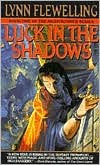
In fact, I just read such a scene in the second Nightrunner novel (by Lynn Flewelling). Seregil had a romantic encounter that was enjoyable and he got some new information to spur him on. Perhaps the only conflict was that he would have liked to have stayed longer, but that sentiment wasn't expressed. He had his fun and now he's off for another adventure! Works for me (as a reader of this scene; actual lifestyle choices are another topic).

I was afraid in looking back over my current WIP that I might find the scenes were too lacking in goals and complications. I was pleased to find that only a handful of scenes needed any tweaking, and the adjustments are minor. My effort to keep goals and conflict in mind as I write has paid off. It's becoming second nature.

Well, I'm off to work more on my "But List", and solve some antagonist issues that are holding things up -- not altogether unexpected behavior for an antagonist.

Adrian

Off-Color After-Thought: In the spirit of the "Bucket List", an actual "Butt List" does sound intriguing....

Thursday, May 13, 2010

A System of Organization


I've spent a bit of time this past week getting myself organized. Rather, I've been organizing my notes, not only for my current and some previous WIPs, but for my new story idea as well (the one I dreamed up while sleeping).

To help me do this, I've started using Microsoft's One Note (tm) program, which is really cool. I've had it for several years but never got around to using it, until recently. I'm glad I did. It's a terrific way to organize notes. Now, instead of using several different programs and sifting through numerous different files, I can put all my notes in one place and access them easily and conveniently without the need to open another program. This is so easy! I even developed a template to help me start off each new novel as I convert my old notes to this new system.

If you're not familiar with One Note (tm), understand that it's based on the idea of a three-ring binder. If you want to organize notes in a binder, you will fill the binder with pages and you'll probably also put some dividers in there to separate the pages into various sections. With this program, you create electronic "notebooks". The notebooks are listed down the left side of your screen so you can move from one notebook to another notebook with just one click. Within each "notebook" you create "dividers" (tabs across the top of the screen) and "pages" (tabs running down the right side of the screen). Click on a notebook, click on a divider, then click on a page and you see that page in the center of the screen. A very simple format and incredibly easy and convenient to use.

I create a new notebook for each novel. Across the top, I have dividers for major sections, including:

PROJECT (with pages for a project time line, weekly goals, work notes to remind me of what I need to do next, and pages for keeping track of eventual submissions, etc.);

IDEAS (a "sandbox" for brainstorming ideas about plot, characters, etc. -- once I have something I want to use, I copy and paste it over to other sections as appropriate);

WORLD (for fantasy world-building, including maps, descriptions of places, and pages for various aspects of the world including mythology, political system, history, culture, etc.);

CONLANGS (if any);

CHARACTERS (with a table listing all the characters, their ages, places of origin and brief identifications, then separate pages for each of the important characters to flesh them out); and

PLOT (with an Overview, and pages for various tables and lists and details, and a tab for each ACT (I divide my stories into Act I, Act II A, Act II B and Act III), where I put details about chapters and scenes within those portions of the story.

It's a lot of work on the one hand, but it has a tremendous, positive impact. In part it makes the process of writing a novel somewhat impersonal. It becomes like any other job: do this, then do that, figure this out, problem solve that, tie this together, and move on, and do it by next week. This logical, organized, impersonal side of the writing process helps make the chaos of the creative side more bearable. I'm amazed at how much information I can keep in one place and how quickly I can locate individual pages using the navigation system of this program -- so much better than hunting around inside multiple lengthy text documents and spreadsheets!

It's been a lot of fun getting this new system up and running, and I'm so glad I finally tried out One Note (tm). It's well worth the effort to learn how it works and develop a system using it.

Best wishes for keeping yourself organized,

Adrian

Monday, May 03, 2010

Staying Centered


Progress is ongoing. I can't help but revise as I move forward -- it's slow, and I've tried to set that aside but I just can't since the progress is so solid. The story is over 38k now and I'm into some exciting chapters at this point. The pace is picking up, the stakes are higher, the intrigue is developing into the full-blown confrontations that will come later in this part of the story. I've had to pause to do some more research but I'm keeping that to a minimum. Parts of this story are set in a variety of locations and I need to gather some information to help me set the story in those places with some sense of local flavor. I'll expand on the details as needed in the eventual "edit" (apart from the ongoing editing).

I've also had major brainstorms on plots for other novels, and awoke one morning with a wonderful new story idea pretty well mapped out. I made notes, and since then have expanded on those notes. I think we move forward and then we need to move laterally to sure up that forward progress. Here I am making breakthroughs with the WIP and suddenly I'm seeing similar issues in other novels I've worked on! I've taken some time this past week to delve into plotting notes for past novels and have gained some new inspiration and learned more about my plotting tendencies and how I can improve. Growth is cyclical, and we need to free ourselves to go with the flow and take advantage of the insights when they come to us.

So, I've now got another exciting new story to work on whenever I get this one finished! I didn't complete the first draft within May (no surprise at this point) but I am making steady progress. I'll have to push the deadline off until the end of May for a complete draft of my WIP. That's okay, as long as I'm making progress. At this point I'm feeling the need to go back and map out what I've written, to help me plot more clearly the specific sequences to come. I'll be working on that now for the next few days.

Looking forward to a productive May,

Adrian

Monday, April 26, 2010

Cool Video


Just had to share this stereotype-busting video with you. Found it on Lee Wind's blog.

Peace,

Adrian

Monday, April 19, 2010

YA Authors vs. Bullying


There is a new Facebook group of YA authors and supporters who are making an effort to stop bullying. Thought I'd pass news of this along. It's a very worthwhile undertaking and I'm proud that authors have gotten involved in what must be an effort by all of us to make a difference.

I read about this on Lee Wind's blog.

Have a happy, peaceful, non-bullied day.

Adrian

Sunday, April 18, 2010

Seat Time


This past week has been a tough one for seat time, with many major distractions pulling me away from my writing. These included finishing the taxes and a new baby in the family (not mine!). I did get some quality work done, but not as much as I had hoped.

I edited the past few chapters again, something I just can't stop doing, probably since it's the way I've been working throughout this entire draft and with good results. It's just been slow, at times too slow and too tedious. I've tried rushing forward but that's not working, either.

The good news is I'm much happier with the past few chapters. One in particular had never satisfied me; I think I can say now it's not nearly as bad as I had thought it was. The editing has focused the conflict and strengthened the sense of how and why things matter to individual characters. And, I'm through that really rough spot in the plot that had tied me up for so long. The word count has grown to 31k on top of the editing work. A meager step forward, but it's very solid progress.

This coming week I'll shoot again for 10k words, and more if I can to help me catch up. It's still possible to complete this draft within April. I know if I do race ahead the quality will go down and I'll have more editing to do later. The only thing that matters, of course, if finishing this manuscript and getting it out the door -- however that happens is fine with me.

I have a larger time line I'm working against, which currently calls for me to finish the first draft in April then spend two months editing, with the finished product ready to mail out by July 1st. With all the editing I've done thus far on this draft, there isn't much more to do with the existing chapters except polish them.

I'm excited whenever I think I'll finally have something ready to send out! And I want to follow it with more stories on a regular basis. All I need is more seat time. I've enjoyed using the Cool Timer (see "Resources" in the sidebar). I don't always need it, but using it gives me an extra push, a sense of urgency.

Wishing everyone else all the seat time they need this week,

Adrian

Saturday, April 17, 2010

Free Timer


I've read a number of blog posts recently that extol the virtues of using a countdown timer while writing. Indeed, setting a limited, immediate writing goal is a terrific way to help yourself focus. You effectively carve a slice of time out of your busy day and set everything else aside, knowing it'll still be there for you later. It's important to remove distractions so nothing interferes with your concentration! A timer can sure help you churn out the work.

To keep yourself fresh, write for 50 minutes, then take a 10 minute break, then write for another 50 minutes, etc. Breaks help. We need to clear our thoughts, release the tension, get some oxygen (get up and walk around!). Breaks help us return refreshed and ready to focus for another go-round.

If you don't have 50 minutes, you can set a shorter writing goal (10-15 minutes) and fit several smaller writing sessions into your busy day. This is a great way to keep in touch with your story rather than dropping it altogether when time is limited. By keeping the story moving, even slowly, you keep it from growing cold; when that happens, you need extra time just to get back into the flow of things before you can write productively again, which means you lose time.

To keep your work on-track, set a specific writing goal for each writing session. For example, "I'll use these 50 minutes to write a first draft of this scene or chapter," or, "I'll use this writing session to edit the last chapter and plan the next chapter," etc. A timer creates immediacy, but you need to complement that with a specific writing goal in order to achieve true focus.

I found a free timer called "Cool Timer" which you can download here. CNET is a great site for technology reviews, downloads, etc. The download is certified spyware-free, plus you can scan it with your own anti-virus software once you download it (just right-click the downloaded file -- you should see an option on the pop-up menu to scan it with your anti-virus software).

See the "Resources" section in the sidebar for more useful stuff!

Happy Writing,

Adrian

Saturday, April 10, 2010

Climbing Over the Rough Patches


In the first week of April No-No I succeeded in breaking every rule I established for myself! Not only did I go back to the beginning and re-read the entire manuscript, but I also edited a bit here and there, in particular the last two chapters. I couldn't help it! Now I know how an addict must feel, trying to kick the habit.

Still, I managed to bring the story forward about 5k words, from 24k to 29k. That's only half the 10k progress I wanted, but I got a lot out of it. I'm not worried that I didn't make 10k -- I never wrote evenly during Nano; it came in bursts but still I made it to 50k for the month. I should still reach 40k by the end of April.

The past couple of chapters have definitely been rough terrain (hence the photo of the dune buggy). It's been a wild ride, but I'm hanging on and things are not as bad as they might be. I do know the plot; I'm just working out the details. I didn't plan this story in extreme detail because I wanted to allow myself the "joy of discovery" -- what was I thinking?! (haha)

I feel by having a specific word count goal I did get more accomplished this past week than I might have otherwise. I'll keep the goal in place and work harder this week to meet it. I hope to finish that missing 5k this weekend and get the new week's 10k done by next weekend.

I'm into Chapter 9 already and the first scene is EXCELLENT. It's the sort of stuff I want to do, and here I am doing it! Not only is this the quality and nature of the material I'm aiming for, in this case it came out clear and well-written the first time through. Exciting!

And the writing goes steadily on,

Adrian

Sunday, April 04, 2010

New Blog Features


HAPPY EASTER!

You may notice a few new items in the sidebar of my blog.

I'm now featuring free MP3 albums which you can listen to and download courtesy of Jamendo. Nice instrumental stuff that you can enjoy while writing. Jamendo offers free, legal downloads of music from aspiring musicians, composers, etc. Check it out!

Each album image has its own controls: you can listen while you view my blog. If you hit the next button (>>) you can check out the next track. And, of course, you can download the entire album to add to your collection.

At the bottom of the sidebar are also some images with links to items you may wish to purchase, if you haven't already. I'm not receiving advertising revenue from this -- I'm just sharing links to things you may enjoy.

You can now also subscribe to my blog from the sidebar, and join as a follower, showing your support.

Back to my WIP,

Adrian

Friday, April 02, 2010

Wake-Up Call!


March has turned into April and my WIP is still not done! So, for what may be the third time now I'm extending my deadline, pushing it off another month! I hope to have the draft finished by the end of April!

And that constitutes a wake-up call!

Ergo, it's time for my own mini-Nano, which I'll call "April No-no" -- it's a no-no that I'm still finishing this draft in April, and no-no I won't let it go beyond that!

Time to determine weekly word-count goals. I'll set a minimum goal of 10k per week, which is about 3 chapters per week based on the length of the chapters thus far (just over 3k each).

In order to accomplish that I'll force myself to turn off the internal editor and just plow on through.

Here are my rules for April:
1. Write only on the WIP until the WIP is done (this draft).
2. Never go back to read more than the last scene before starting new writing, unless I have to search back to check a detail to maintain continuity.
3. Move forward with a bare minimum of editing as I go.
4. Read over and tweak current work only if it doesn't interfere with meeting the day's word count goal within the time available.
5. Believe that everything I'm writing is the best thing I've ever written and, besides, it'll all work out in the editing.
I'll keep you posted as I bring this draft to its conclusion within April!

BTW, I've succeeded with Nano at 50k, I should be able to do April No-no at 40k! Let's hope so. The difference is this is real, and I'm really serious about this WIP as something to send out the door, so I'm taking it much more seriously: it's not a throw-away writing exercise.

The race is on!

Adrian

Wednesday, March 31, 2010

Burning the Midnight Oil


I've been working productively again. I had one really good night and a few so-so nights, but at least I've finally paved over the pot hole, that spot where my story kept sticking. I've bridged the transition and am on to the new stuff that's so much more interesting. It's fun again!

Note for future reference: when the story gets stuck, ask if you have enough story! Turns out the solution was I needed to add some other plot elements. I added two big events that give much more momentum to this section of the story. Now I can enjoy watching them unfold!

Adrian

Friday, March 26, 2010

Plucking Away


I'm still plucking away in the same mired-down spot of my current WIP. It's frustrating, to be sure. I'm trying to break through, to push on, to get the momentum going again. It's slow, tedious, a veritable dry spell, but I'm not floundering: I do know the rest of the story. I'm just not focused as I need to be. Lack of sleep and too many distractions have a lot to do with it. I'll have to catch up on some sleep and set aside some quality writing time without the usual potential for interruptions. I can do it!

One of my distractions has been reading. I've found several terrific new blogs to follow and have started using a blog reader, instead of just visiting each blog each time I want to know what's new. The blog reader is really cool and makes it easy to browse through a number of blogs at once and read any new postings that are of interest. I know I'm late getting on the band wagon, but now that I've discovered how to use a blog reader, I'm hooked. I'll just have to manually disconnect from the internet to force myself to write!

Looking beyond the obvious . . . .

We grow over time. Sometimes the progress is dramatic; at other times it seems we're not moving forward, even though we are: we need time to internalize the growth. My perspectives on my work and writing career are shifting, maturing, deepening. I feel I am in a transition phase where I'm leaving behind the "trying-to-get-there" mode and am entering the "I'm-there-and-here's-the-proof" mode. Perhaps part of my problem with focusing is due to the fact that there is a lot going on under the surface right now. A major change is happening. Hopefully, I'm gearing up mentally and emotionally for a new push forward. I see myself getting things done in the coming months, finishing one manuscript after the other, rather than just struggling to complete a series of drafts that never quite reach their final polish. Certainly it's time I got there!

Philosophizing aside, I still need to chain myself to my laptop and get to work.

Yes, that's what I'm going to do, right now . . . sit here and pluck away at my manuscript, until I see the progress on the page!

Adrian

Monday, March 22, 2010

The Importance of Being Cheerful


At times, writing is pure bliss. It moves you, stirs you, touches you to the very core. Ideas flow, the writing just happens, and the results are terrific. At other times, of course, it's hard to find an idea, no words will come, and whatever you get down on the page is not worth the trouble of reading it. It's during those times that we have to remember to be cheerful.

When I write, I can be any number of persons. I can assume the identity of any of my characters, or the prospective Reader, or myself at any of many ages or stages of my life. When the writing gets tough, however, my inner baboon comes out. I prance around, posturing, beating my chest, proclaiming loudly that I am better than this, that my writing should never suffer the doldrums. My primitive instincts come out and I'm not a joy to be around.

I realize that writing is 99% unfathomable process and at least 1% grace. I have to hold on to that one percent. I have to remember to act with grace under pressure. I have to let go of my inner baboon and try my very best to act in a dignified and pleasant manner. It's best to approach my work with a can-do attitude. I should be cheerful, and approach my work in a cheerful manner, even if I don't feel like it.

Putting on a happy face ultimately helps us find the joy within us, which can only help us as we press on through the ups and downs of the writing process.

Adrian